Before we knew his favourite toy, his favourite blanket, or even his little routine, we knew one thing: our baby loved hearing us nearby.
Sometimes it was Mama humming the same melody she had sung all through pregnancy. Sometimes it was Dada making up the words to a song he could barely remember. Sometimes there were no words at all, just a soft “mmm” in a quiet room.
We were new parents, far from our family, learning everything together. And in those early weeks, singing became one of the sweetest parts of our day.
01 / The beginningWe sang. And sang. And sang some more.
There were lullabies after feeds. Humming during cuddles. Tiny stories while we walked around the room. On some evenings, hearing our voices seemed to help him settle, and seeing his eyes soften felt like magic.
But then there were the other nights.
One of us was still recovering. The other was tired from a full day. We had laundry to finish, bottles to wash, and a little boy who sometimes wanted that same familiar sound all over again.

We loved singing to him. We still do. But loving your baby and feeling exhausted can both be true. When our voices were tired, it wasn’t because we cared any less. It was because we were learning to care for a new little human around the clock.
He wasn’t asking for a perfect performance. He just knew the sound of home.A little truth we carried with us
02 / The little questionWhat if we could save that feeling?
We started thinking about the moments when we needed a short pause, but still wanted to offer him a familiar bedtime routine.
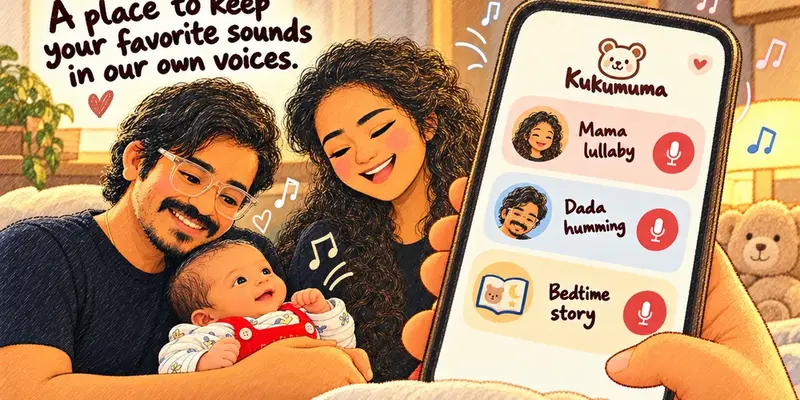
What if we could keep a recording of Mama’s gentle humming? Dada’s made-up bedtime story? That one little song we sang so often we’d never forget it?
Not to replace holding him. Not to leave him to settle alone. Just one more small, thoughtful way to make familiar sounds part of our day.

03 / The idea that became KukumumaA little library of love.
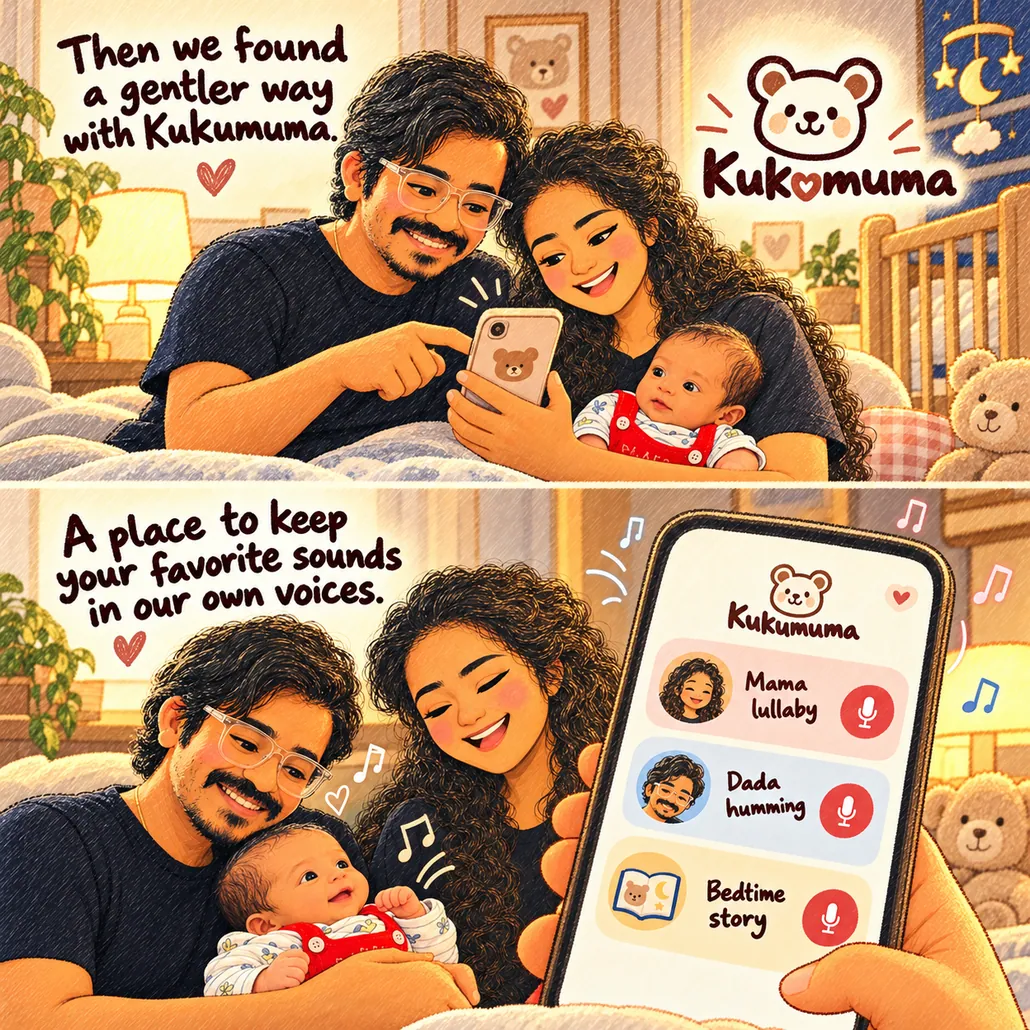
That feeling became part of Kukumuma, the parenting companion we’re building from our own newborn journey.
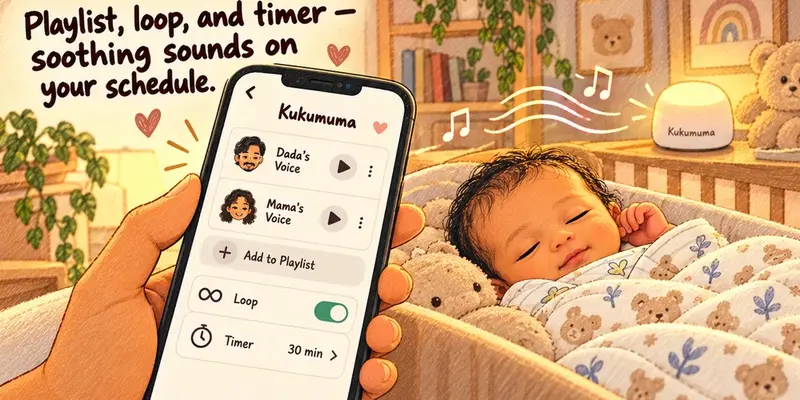
With voice lullabies, you can record or import your own humming, lullabies and bedtime stories, and keep the little sounds that matter to your family together. Play them as part of a routine, loop them softly, and set a timer for a gentle ending. You can also choose to share a recording with another parent in your family.
The most familiar playlist in the world.
Not a stranger’s voice. Not a song you have to sing perfectly. Just the little sounds that make your family yours, saved for the moments you want to hear them again.
Record or import · Make a playlist · Loop softly · Set a timer
The recordings are personal, too. They stay on your phone unless you choose to share one with the other parent in your family, and shared recordings are encrypted before they leave your device.
Want to begin with something simple? You don’t need to be a singer or a storyteller. You only need a sound your little one has heard from you before.
Try a 20-second hum or the first verse of your favourite lullaby.
Name it “Mama’s song” or “Dada’s story” and add it to your bedtime collection.
Use a comfortable low volume and a timer whenever a familiar sound fits your routine.
04 / The part that matters mostTechnology can hold the song. We still hold the baby.
A recording isn’t a cuddle. It doesn’t know when a baby needs feeding, changing, warmth, or medical attention. And it doesn’t replace the comfort of real voices, eye contact, and responsive care.
For us, the beauty is in having another option: a familiar sound for a quiet moment, while we stay present and attentive. We still sing. We still scoop him up. We still have the nights when nothing works on the first try.
Keep playback gentle and your phone or speaker well away from your baby’s sleeping space, with no loose devices or soft toys in the cot. If your baby is upset, check their needs rather than relying on sound alone. A recording should support your care, never replace it.
We haven’t found a way to make newborn days effortless. No app can. But we have found small ways to make them feel a little less overwhelming.
And sometimes, that’s enough to give you one more minute to breathe, before you sing the next verse yourself.