Nights with a newborn are long, repetitive and lonely. A little preparation can make them quieter, safer and a bit kinder to you.
01Set up before you need it
Nappies, wipes, a spare outfit and a muslin close to where you change.
A comfortable chair or bed with support for your back, plus a drink and a snack for you.
A low, warm light, not the main light. A red or amber night light is gentler.
02The calm night routine
- Respond early. Feed at the first hunger cues, so your baby does not get fully awake and upset.
- Keep it boring. Low light, quiet voice, no play or bright screen.
- Change only if needed. A dirty nappy, or a very wet one, otherwise leave it.
- Wind gently, then settle your baby on their back in their own sleep space.
- Sleep as soon as you can. Skip the chores. Rest is the job.
03If you might fall asleep while feeding
Everyone dozes sometimes. The risk is greatest on sofas and armchairs, when you are very tired, or after medicines, alcohol or drugs. To make it safer:
- Put your baby back in their own cot or bassinet after each feed.
- If you may fall asleep, choose a firm, flat surface, clear of pillows and loose bedding, rather than a sofa.
- Ask your partner to check on you, or share the night.
- Talk to your midwife or health visitor about the safest option for your home.
Falling asleep with a baby on a sofa or armchair is linked to a much higher risk of sudden infant death. If you feel very sleepy, hand the baby to someone else or place them safely in their cot first.
04Share the night
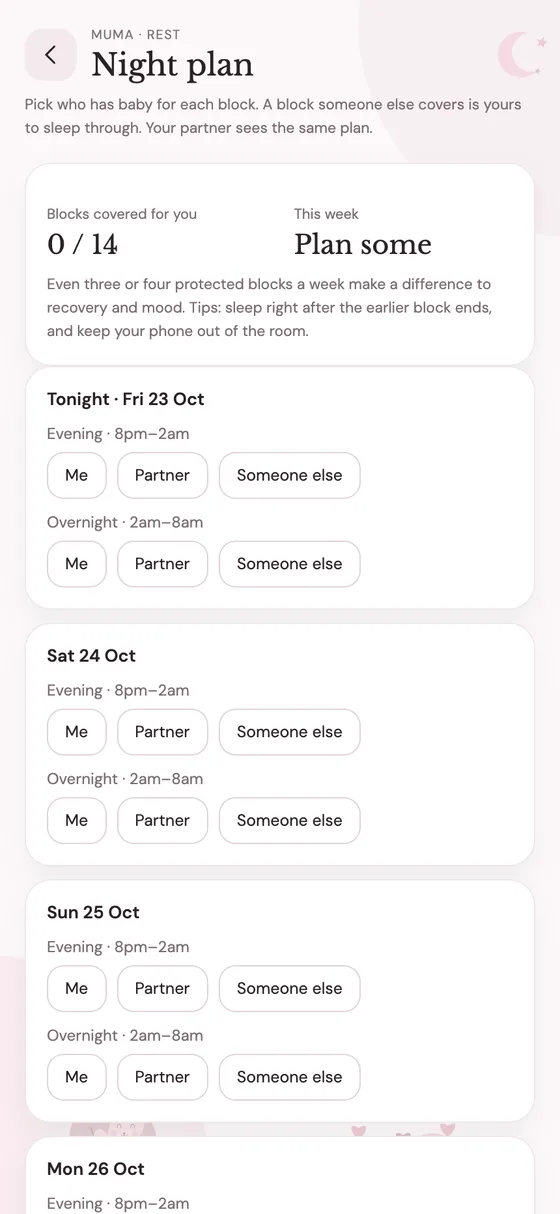
If you have a partner or another adult at home, divide the night into two blocks so each of you gets one long stretch of sleep. See our guide to sharing baby care for the details. If you are on your own, ask a friend or relative to take one early-morning feed or a daytime nap shift now and then.
05Looking after you at night
- Drink water and have a snack when you feed.
- Do not scroll. Use audio, a podcast or quiet music if you need company.
- Remember that the hard hours pass. Babies change quickly.
- If you cannot sleep even when the baby does, or you feel very low, tell your doctor.
Kukumuma’s Night plan shows the next likely feed and what to do for the hours ahead, and the log tells you the last feed time without asking.
06Quick answers
How do I make night feeds easier?
Set up before bed: nappies, wipes, water and a snack within reach, a dim light, and a comfortable place to feed. Keep lights low and talk quietly so your baby settles again quickly.
Is it safe to fall asleep while feeding my baby?
It is safest to put your baby back in their own sleep space after a feed. Sofas and armchairs are especially risky if you fall asleep with your baby. If you think you might doze, plan ahead and ask your midwife for advice on the safest set-up.
How long do night feeds last?
It varies a lot. Many babies still feed at night until at least 6 months, and some longer. It is normal.
This guide is general information and does not replace advice from your doctor, midwife or health visitor. Guidance changes and differs between countries, so follow your own health service. If you are worried about your baby or yourself, call them. In an emergency, call your local emergency number.