Nappies are the easiest way to tell whether your baby is getting enough milk. Here is what is typical, and what is not.
01Nappies by day
| Day of life | Wet nappies | Dirty nappies (typical) |
|---|---|---|
| Day 1 | 1 or more | 1 or more, black and sticky (meconium) |
| Day 2 | 2 or more | 1 or more, dark green or brown |
| Day 3 | 3 or more | At least 1, lighter green or brown |
| Day 4 | 4 or more | At least 2, turning yellow |
| Day 5 and on | 6 or more heavy ones | Breastfed: often 3 or more a day at first; formula-fed: at least 1 a day |
These are typical counts for a baby who is feeding well. A wet nappy should feel heavy, not just damp. Disposable nappies that hold a lot are hard to judge, so pour a little water on a clean one to feel what “heavy” means.
02What the colours mean
| Colour | Usually means |
|---|---|
| Black, sticky | Meconium, the first poo. Normal in the first 1 to 2 days. |
| Dark green or brown | The change from meconium. Normal in days 2 to 4. |
| Mustard yellow, seedy, loose | Typical for breastfed babies. |
| Tan, yellow-brown, firmer | Typical for formula-fed babies. |
| Green | Often normal, and can happen with fast flow or a feed change. |
| Orange or pink crystals in wet nappy | Urates. Common in the first days, but mention it if it continues past day 4 or 5. |
Breastfed babies can go several days without a poo after about 6 weeks and still be well, if they are feeding, gaining weight and comfortable. Check with your health visitor if you are unsure.
03When to call your doctor
- Pale, white, grey or clay-coloured stools. This needs prompt checking, because it can be a sign of a liver or bile problem.
- Black stools after the first few days.
- Blood in the stool.
- Fewer wet nappies than expected, dark or strong-smelling urine, a dry mouth, or a sunken soft spot, which can point to dehydration.
- Watery stools many times in a day, especially with vomiting or fever.
- Hard, pellet-like stools with straining and crying.
Take a photo of the nappy to show your doctor, and keep a note of the time. If your baby is very sleepy, not feeding, or you are worried, call straight away. In an emergency, call your local emergency number.
04Nappy rash basics
- Change nappies often and clean gently with water or fragrance-free wipes.
- Let skin air-dry for a few minutes when you can.
- Use a thick barrier cream as your pharmacist or doctor suggests.
- See a doctor if the rash has blisters, open sores, or is not improving after 2 to 3 days.
05Tracking without counting in your head
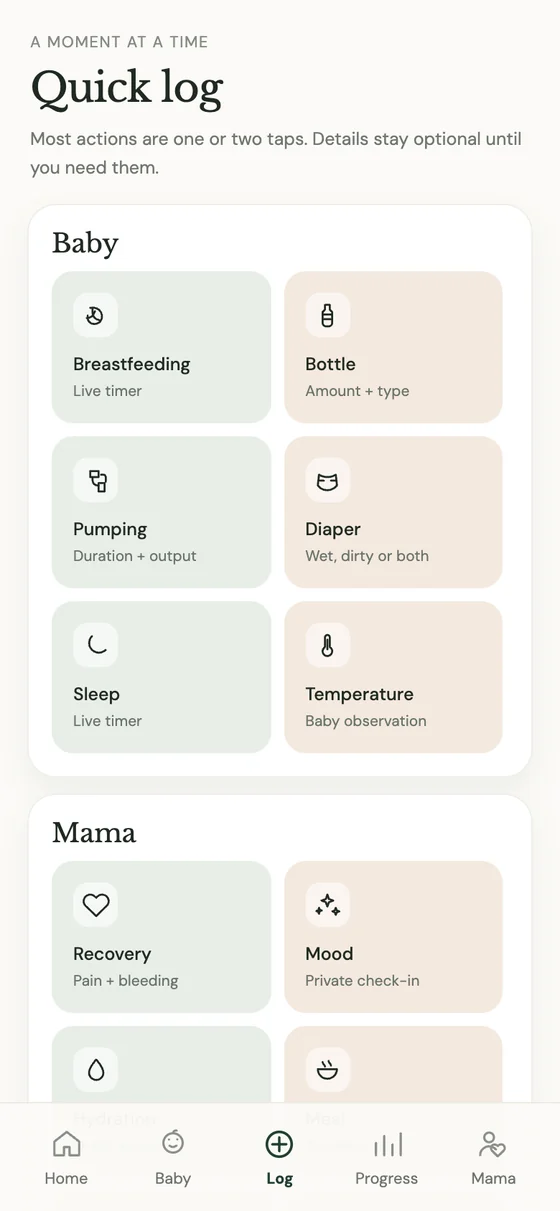
Counting nappies at 4 a.m. is a hard job. Kukumuma logs a wet or dirty nappy in one tap, and you can show your health visitor or doctor the last few days at a glance.
06Quick answers
How many wet nappies should a newborn have?
About 1 on day 1, 2 on day 2, 3 on day 3, 4 on day 4, and from about day 5 usually 6 or more heavy wet nappies a day.
What colour should newborn poo be?
Black and sticky (meconium) for the first day or two, then green-brown, then mustard yellow, seedy and loose in breastfed babies, or tan to brown and firmer in formula-fed babies.
When should I worry about my baby’s poo?
Call your doctor if the stool is very pale, white or grey, if it is black after the first few days, or if there is blood. These can need prompt attention.
This guide is general information and does not replace advice from your doctor, midwife or health visitor. Guidance changes and differs between countries, so follow your own health service. If you are worried about your baby or yourself, call them. In an emergency, call your local emergency number.