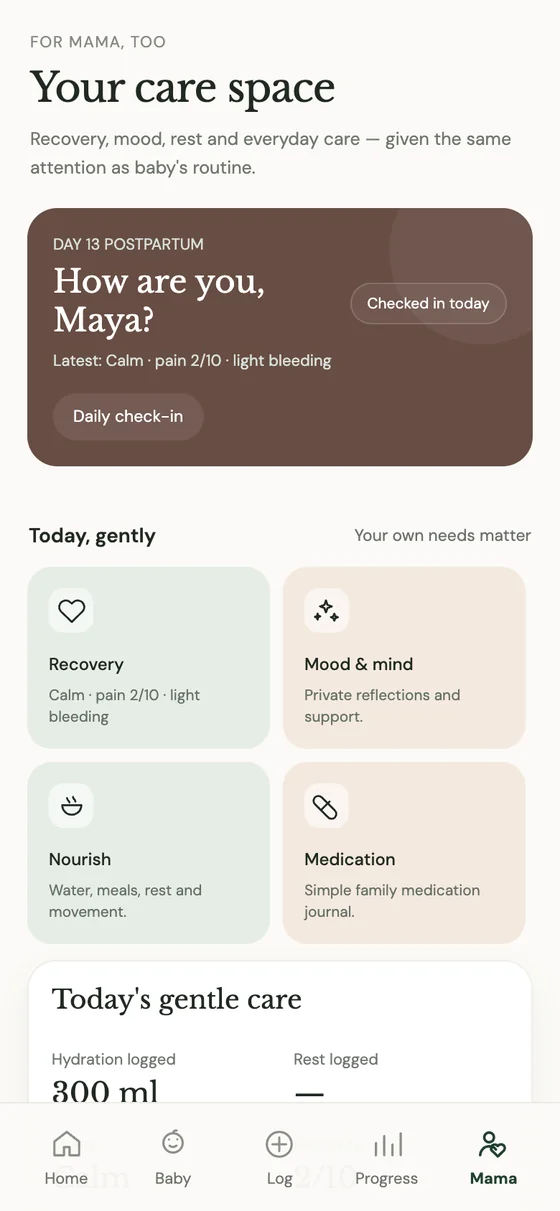
You have spent months thinking about the baby. This one is about you. Recovery is real, and it is slower than most people are told.
01Week 1: the first days
- Bleeding: bright red, like a heavy period, with some clots no bigger than a small plum.
- Pain: soreness in the perineum or at the caesarean wound, and “afterpains” as the womb shrinks, especially when feeding.
- Emotions: the “baby blues” often peak around day 3 to 5 as hormones drop and milk comes in. Tearfulness is common.
- Rest: as much as you can. Let visitors help, not be hosted.
02Weeks 2 to 6: slowly better
- Bleeding lightens and usually stops by around 4 to 6 weeks, sometimes with a brief increase when you are more active.
- Stitches heal, and soreness eases. Walking short distances daily helps circulation and mood.
- Baby blues should ease by about 2 weeks. If low mood or worry is getting heavier, tell your doctor.
- Sleep deprivation peaks. It makes everything feel harder, including pain and feelings.
- Pelvic floor exercises can start gently when you feel ready, with advice from your midwife or a physiotherapist.
03Weeks 6 to 12: the check-up and beyond
- Most people have a postnatal check around 6 to 8 weeks. Use it. Ask about bleeding, pain, contraception, mood, sex, and anything that worries you.
- A caesarean recovery often takes 6 to 12 weeks to feel fully normal. Avoid heavy lifting until your clinician says it is safe.
- Hair loss, night sweats and tiredness can still happen as hormones settle.
- If you are breastfeeding, discomfort or a blocked duct should be looked at early.
04Your mood: blues, anxiety and depression
Around 1 in 7 new mothers has postnatal depression, and some partners do too. It can show up as low mood, anxiety, anger, trouble bonding, being unable to sleep even when the baby sleeps, or feeling numb.
It is common, treatable, and not a sign of weakness. Please speak to your doctor, midwife or health visitor if feelings last more than about 2 weeks or are getting worse. A simple questionnaire such as the Edinburgh scale can help start the conversation, and Kukumuma’s Muma section has a private check-in that you can show your doctor.
Tell someone now. Call your local emergency number or a crisis line, or go to the nearest emergency department. This is an illness that can be treated, and you will not be judged.
05Warning signs: get help the same day
- Soaking a pad in an hour, or passing clots larger than a golf ball.
- A fever of 38°C (100.4°F) or higher, or chills.
- Severe headache, changes in vision, or pain under the ribs.
- Chest pain or shortness of breath.
- A hot, red, swollen or painful calf or leg.
- Foul-smelling discharge, or a wound that is opening, leaking or very red.
- Pain or burning on passing urine, or being unable to pass urine.
If it feels like an emergency, call your local emergency number. Do not wait for your check-up.
06Looking after you
- Eat and drink regularly, with a snack and water within reach where you feed.
- Accept help with specific jobs: meals, laundry, holding the baby while you shower.
- Sleep when you can, and share the night with your partner where possible.
- Keep notes about bleeding, pain and mood so you remember to ask at your check-up.
- Tell someone honestly how you are, not how you think you should be.
07Quick answers
How long does postpartum recovery take?
Many people feel physically much better by 6 to 8 weeks, but full recovery can take several months, longer after a caesarean or a difficult birth. Emotional recovery also takes time.
How long does postpartum bleeding last?
Bleeding (lochia) commonly lasts 4 to 6 weeks, lightening from red to pink to yellowish-white. Heavy bleeding or large clots need urgent medical advice.
What is the difference between baby blues and postnatal depression?
Baby blues are mood swings and tearfulness that usually start around day 3 to 5 and ease within about 2 weeks. Low mood, anxiety or thoughts of harm that last longer or feel worse deserve a conversation with your doctor.
This guide is general information and does not replace advice from your doctor, midwife or health visitor. Guidance changes and differs between countries, so follow your own health service. If you are worried about your baby or yourself, call them. In an emergency, call your local emergency number.